Stationary Robot#
Robotics Pick and Place in Industrial Fields#
Robotics pick and place is a critical task in industrial automation where robots are employed to manipulate objects from one location to another within a manufacturing environment. This process involves the accurate identification, grasping, and relocation of items, contributing significantly to the efficiency and productivity of various industrial operations.
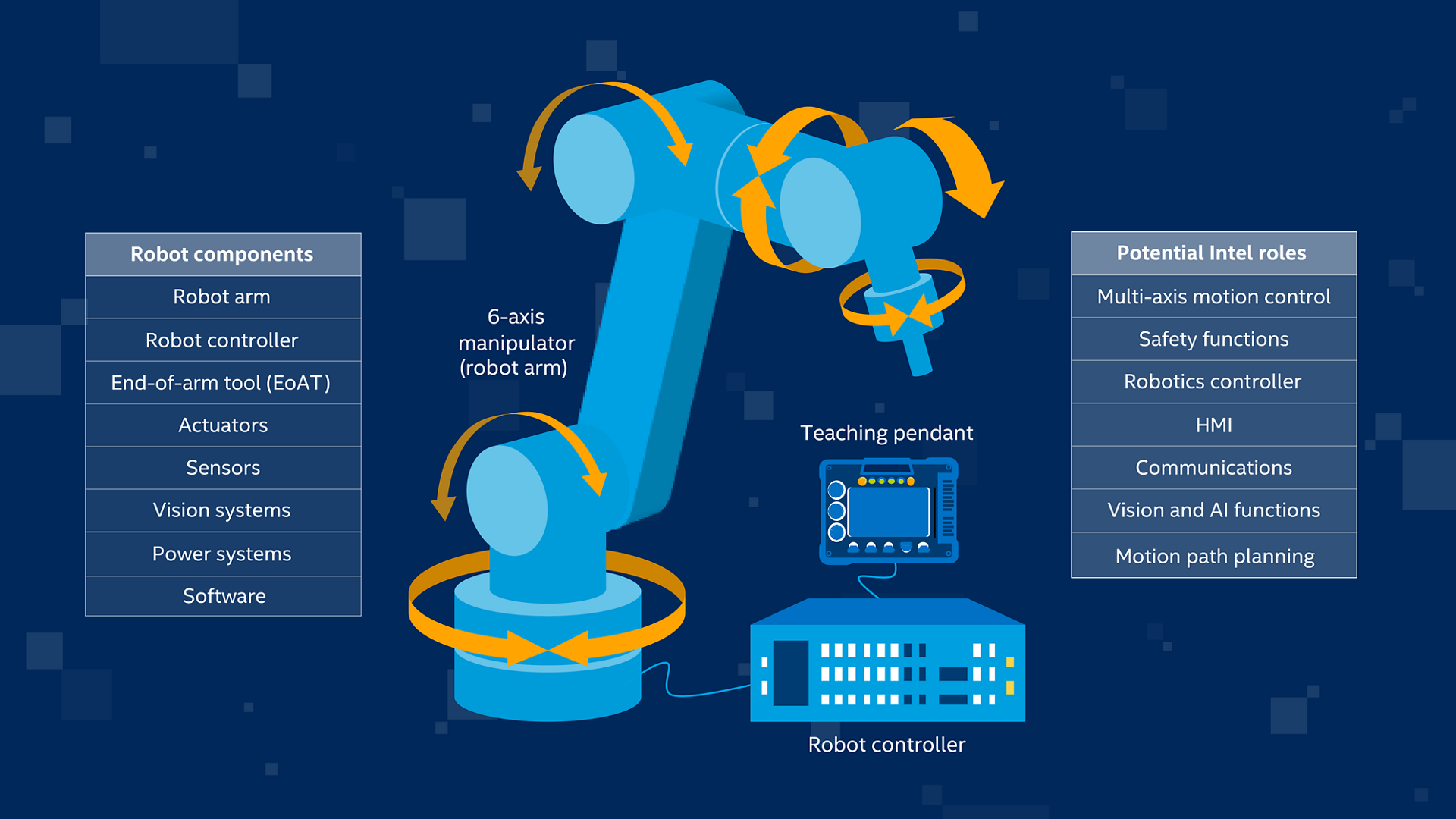
Stationary Robot offers a flexible and versatile framework to solve the majority of use cases in Industrial fields.
Challenges#
The robotics pick and place task presents several challenges that need to be addressed for successful implementation:
Object Detection and Recognition: Efficiently identifying objects in varying orientations, shapes, and sizes within cluttered environments is essential for successful pick and place operations.
Grasping and Manipulation: Developing robust grasping strategies to securely hold objects of different textures, weights, and fragilities is crucial for preventing dropped items and ensuring smooth manipulation.
Path Planning and Navigation: Optimizing the robot’s trajectory to minimize travel time and avoid collisions with obstacles or other machinery is necessary to enhance operational efficiency and safety.
Real-time Adaptation: Ability to adapt to dynamic changes in the environment, such as variations in object position or unexpected obstacles, is essential for maintaining uninterrupted workflow.
Integration with Manufacturing Systems: Seamless integration of robotic systems with existing manufacturing processes and technologies, such as conveyors or assembly lines, is vital for achieving cohesive and synchronized operations.
Solutions#
To address the challenges associated with robotics pick and place in industrial fields, various solutions are being developed and implemented:
Advanced Sensing Technologies: Utilizing advanced sensor technologies, such as 3D vision systems and depth cameras, for accurate object detection and recognition in complex environments.
Robotic Grippers and End Effectors: Designing specialized grippers and end effectors equipped with tactile sensors and adaptive mechanisms to enhance grasping capabilities and accommodate diverse object types.
Algorithmic Innovations: Developing sophisticated algorithms for path planning, collision avoidance, and real-time decision-making to optimize robot movements and adapt to dynamic scenarios.
Machine Learning and AI: Leveraging machine learning and artificial intelligence techniques for intelligent perception, grasp planning, and adaptive control, enabling robots to learn from experience and improve performance over time.
Interoperability and Connectivity: Establishing standardized communication protocols and interfaces to facilitate seamless integration between robotic systems and existing manufacturing infrastructure, promoting interoperability and data exchange.