gvawatermark#
Overlays the metadata on the video frame to visualize the inference results.
With device=GPU, the element draws with OpenCL straight into the planes of
NV12 frames in video memory: video/x-raw(memory:VAMemory) on Linux, and
video/x-raw(memory:D3D11Memory) or video/x-raw(memory:D3D12Memory) on
Windows. The frame is not copied to system memory, which the CPU renderer has to
do for every frame in video memory.
The GPU renderer draws the same pixels as the CPU renderer: boxes, labels and their backgrounds, keypoints and their connections, instance segmentation masks, and blurred regions.
Its cost depends on the area the watermark covers, not on the frame size: labels are rasterized on the CPU once and reused across frames. Blurring large regions is the expensive part, see Performance consideration.
Frames in another format, and frames with rotated regions (from oriented detection models such as YOLO-OBB), are drawn by the CPU renderer instead, one frame at a time.
Semantic segmentation masks are drawn only on
BGRx,BGRAandBGRframes, by the CPU renderer. Neither renderer draws them onNV12, and onI420the CPU renderer draws no segmentation masks at all: such frames stop the pipeline with an error.The GPU renderer is built when OpenCL is found, and on Linux also VA-API. If the GPU cannot share the frames with OpenCL, the element logs a warning and uses the CPU renderer.
On Meteor Lake and Arrow Lake integrated GPUs with the
i915kernel driver,device=GPUuses the CPU renderer. There the compute runtime submits work directly to the GPU while OpenVINO runs on it, and the OpenCL renderer then slows inference down. SettingNEOReadDebugKeys=1 EnableDirectSubmission=0turns that off, and the element uses the GPU renderer again.On Linux,
devicedefaults toCPU. Setdevice=GPUand keep the frames in VAMemory:gst-launch-1.0 filesrc location=${VIDEO_FILE} ! decodebin3 ! "video/x-raw(memory:VAMemory)" ! \ gvadetect model=${MODEL_FILE} device=GPU pre-process-backend=va-surface-sharing ! queue ! \ gvawatermark device=GPU ! vapostproc ! autovideosink
Note: On Linux, the GPU renderer draws into the VA surface itself. A decoder may still use that surface as a reference picture, and a
teeshares it with its other branches, so the watermark can show up in later frames and in the other branches. The CPU renderer is not affected. To prevent it, copy the frame right beforegvawatermark. The copy does not change the pixels:... ! vapostproc disable-passthrough=true ! "video/x-raw(memory:VAMemory),format=NV12" ! gvawatermark device=GPU ! ...
See Displaying analysis results with gvawatermark for when to choose the CPU or the GPU.
On Windows, the element also accepts video/x-raw(memory:D3D11Memory) and
video/x-raw(memory:D3D12Memory) in NV12 and BGRA, and differs from the
Linux listing below:
devicedefaults toGPUon D3D11Memory and D3D12Memory, and toCPUon system memory.device=GPUwith system memory is an error.Either renderer first copies the frame into a texture of its own on the GPU, so the watermark does not show up in other branches of a
teeor in the decoder’s reference frames.With the D3D12 decoders, the pipeline stays in D3D12Memory when every element accepts it, which is faster than D3D11Memory:
gst-launch-1.0 filesrc location=${VIDEO_FILE} ! decodebin3 ! gvadetect model=${MODEL_FILE} device=GPU ! queue ! \
  gvawatermark ! d3d12videosink
Pad Templates:
  SINK template: 'sink'
    Availability: Always
    Capabilities:
      video/x-raw
                format: { (string)BGRx, (string)BGRA, (string)BGR, (string)NV12, (string)I420 }
                  width: [ 1, 2147483647 ]
                height: [ 1, 2147483647 ]
              framerate: [ 0/1, 2147483647/1 ]
      video/x-raw(memory:DMABuf)
                format: { (string)RGBA, (string)I420 }
                  width: [ 1, 2147483647 ]
                height: [ 1, 2147483647 ]
              framerate: [ 0/1, 2147483647/1 ]
      video/x-raw(memory:VASurface)
                format: { (string)NV12 }
                  width: [ 1, 2147483647 ]
                height: [ 1, 2147483647 ]
              framerate: [ 0/1, 2147483647/1 ]
      video/x-raw(memory:VAMemory)
                format: { (string)NV12 }
                  width: [ 1, 2147483647 ]
                height: [ 1, 2147483647 ]
              framerate: [ 0/1, 2147483647/1 ]

  SRC template: 'src'
    Availability: Always
    Capabilities:
      video/x-raw
                format: { (string)BGRx, (string)BGRA, (string)BGR, (string)NV12, (string)I420 }
                  width: [ 1, 2147483647 ]
                height: [ 1, 2147483647 ]
              framerate: [ 0/1, 2147483647/1 ]
      video/x-raw(memory:DMABuf)
                format: { (string)RGBA, (string)I420 }
                  width: [ 1, 2147483647 ]
                height: [ 1, 2147483647 ]
              framerate: [ 0/1, 2147483647/1 ]
      video/x-raw(memory:VASurface)
                format: { (string)NV12 }
                  width: [ 1, 2147483647 ]
                height: [ 1, 2147483647 ]
              framerate: [ 0/1, 2147483647/1 ]
      video/x-raw(memory:VAMemory)
                format: { (string)NV12 }
                  width: [ 1, 2147483647 ]
                height: [ 1, 2147483647 ]
              framerate: [ 0/1, 2147483647/1 ]

Element has no clocking capabilities.
Element has no URI handling capabilities.

Pads:
  SINK: 'sink'
    Pad Template: 'sink'
  SRC: 'src'
    Pad Template: 'src'

Element Properties:
  async-handling      : The bin will handle Asynchronous state changes
                        flags: readable, writable
                        Boolean. Default: false
  displ-cfg           : Comma separated list of KEY=VALUE parameters of displayed notations.
                        Available options:
                        * show-labels=<bool> enable or disable displaying text labels, default true
                        * font-scale=<double 0.1 to 2.0> scale factor for text labels, default 0.5
                        * thickness=<uint> bounding box thickness, default 2
                        * color-idx=<int> built-in color table entry for bounding box, keypoints, and text, default -1 (per-object colors). Built-in table: 0 red, 1 green, 2 blue, 3 yellow, 4 cyan, 5 magenta, 6-17 intermediate hues, 18 black, 19 white
                        * color-table=<path> file with object colors per label, one 'label: R,G,B' entry (0 to 255) per line, '#' starts a comment, default empty (built-in colors derived from the label)
                        * font-type=<string> font type for text labels, default triplex. Supported fonts: simplex, plain, duplex, complex, triplex, complex_small, script_simplex, script_complex
                        * draw-txt-bg=<bool> enable or disable displaying text labels background, by enabling it the text color is set to black or white, whichever contrasts better with the background, default true
                        * show-roi=<string> colon-separated list of labels to include (only these objects will be shown), default empty
                        * hide-roi=<string> colon-separated list of labels to exclude (these objects will be hidden), default empty
                        * enable-blur=<bool> enable ROI blurring for privacy protection, default false
                          NOTE : Blurring is applied only when "enable-blur=true"; if no "show-blur-roi" / "hide-blur-roi" filters are set, all ROIs are blurred
                          NOTE : show-blur-roi takes precedence over hide-blur-roi when both are specified
                        * show-blur-roi=<string> colon-separated list of object labels to blur (e.g., "face:person")
                        * hide-blur-roi=<string> colon-separated list of labels to exclude from blurring (show-blur-roi takes precedence)
                        * text-x=<float> x position (pixels) for full-frame text (e.g. from gvagenai), default 0
                        * text-y=<float> y position (pixels) for full-frame text (e.g. from gvagenai), default 25
                        * ff-custom-txt=<string> extra custom text for full-frame display (limit 20 characters), default empty
                          NOTE : text-x and text-y apply to ff-custom-txt position

                        e.g.: displ-cfg=show-labels=false
                        e.g.: displ-cfg=font-scale=0.5,thickness=3,color-idx=2,font-type=plain
                        e.g.: displ-cfg=color-table=/path/to/colors.txt
                        e.g.: displ-cfg=show-labels=true,show-roi=person:car:truck
                        e.g.: displ-cfg=show-labels=true,hide-roi=bottle:cup
                        e.g.: displ-cfg=enable-blur=true,show-blur-roi=face:person
                        e.g.: displ-cfg=text-y=680 (place full-frame text near bottom of a 720p frame)
                        e.g.: displ-cfg=text-y=680,ff-custom-txt='Custom Text' (place 'Custom Text' near bottom of a 720p frame)

                        flags: readable, writable
                        String. Default: null
  device              : Supported devices are CPU and GPU. Default is CPU on system memory and GPU on video memory
                        flags: readable, writable
                        String. Default: null
  displ-avgfps        : If true, display the average FPS read from gvafpscounter element on the output video.
                        The gvafpscounter element must be present in the pipeline.
                        e.g. ... ! gvawatermark displ-avgfps=true ! gvafpscounter ! ...
                        flags: readable, writable
                        Boolean. Default: false
  message-forward     : Forwards all children messages
                        flags: readable, writable
                        Boolean. Default: false
  name                : The name of the object
                        flags: readable, writable
                        String. Default: "gvawatermark0"
  parent              : The parent of the object
                        flags: readable, writable
                        Object of type "GstObject"
Visual Examples#
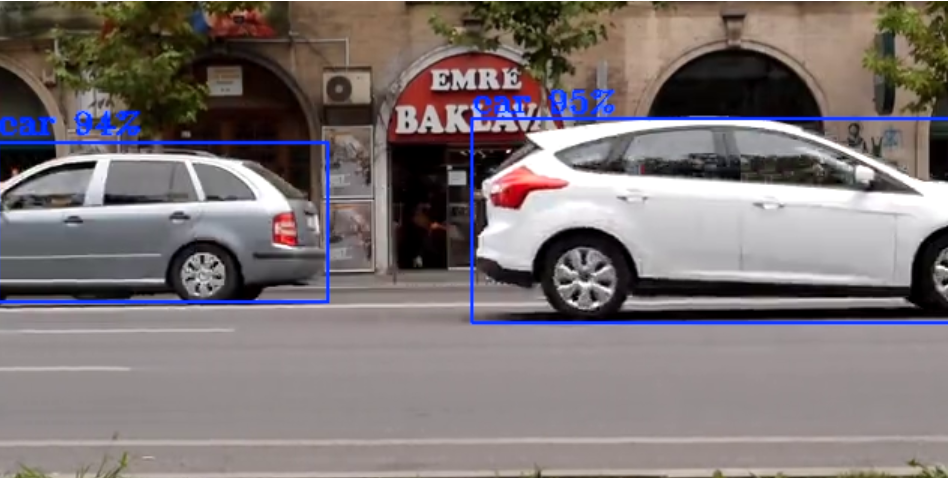
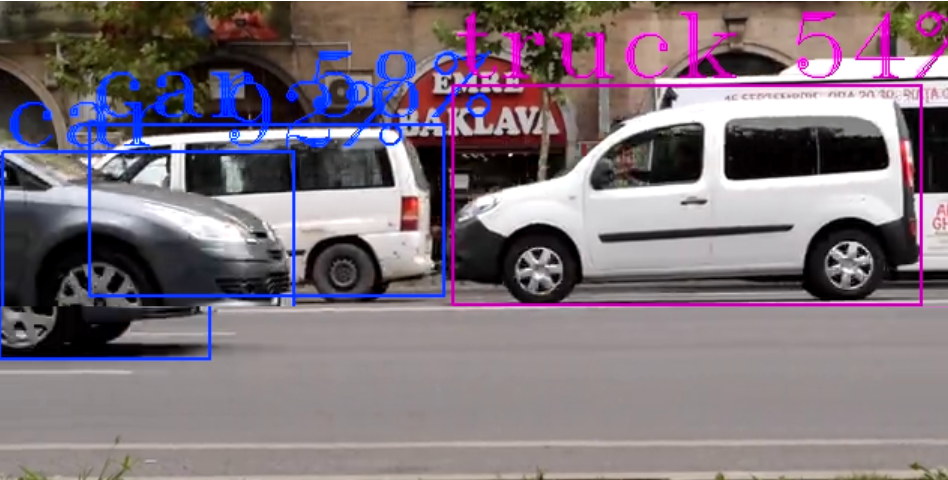
The following examples demonstrate how different displ-cfg parameters affect the watermark appearance:
Font Scale#
Controls the size of text labels displayed on detected objects.
Small Font Scale (font-scale=0.7)
Large Font Scale (font-scale=2.0)
Label Display#
Labels Disabled (show-labels=false)
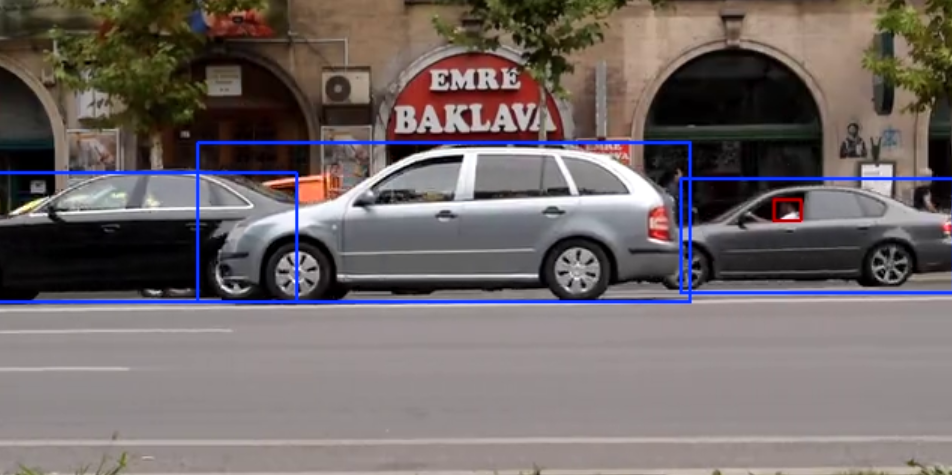
Shows only bounding boxes without text labels
Text Background#
Text Background Enabled (draw-txt-bg=true)
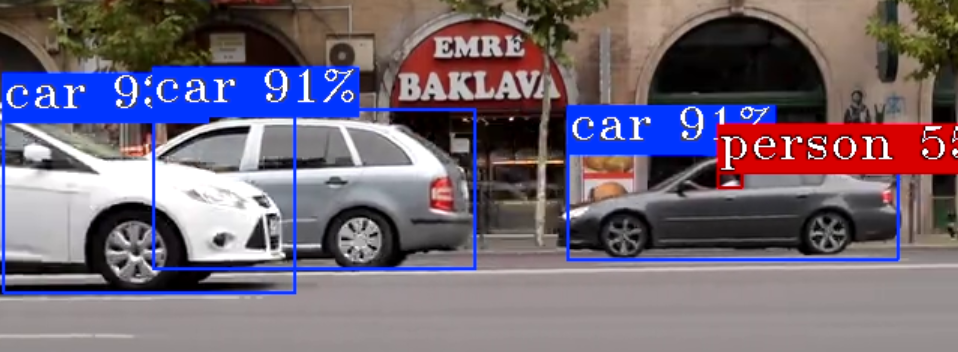
Blue background makes text more readable over complex backgrounds
The background takes the object’s color and the text is drawn in black or white, whichever contrasts better with it: black on light colors such as yellow, green and cyan, white on dark and saturated ones such as blue and red.
Color Index#
Red Color (color-idx=0)
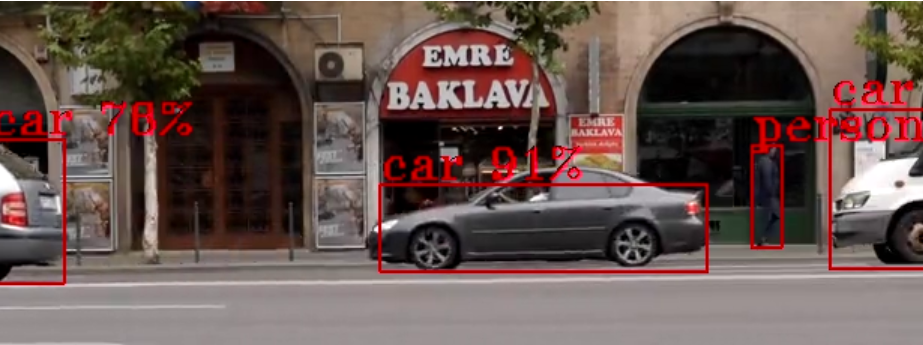
Uses red color for bounding boxes and text
Default Bounding Box Colors#
When color-idx is not set, the color of a bounding box is derived from the
object label only, so a given class is always drawn with the same color,
regardless of the model or the run:
Labels are compared case-insensitively, ignoring spaces,
_and-(traffic light,traffic_lightandtrafficlightare the same label).COCO classes use the colors YOLO models have always been drawn with, e.g.
personred,bicyclegreen,carblue,motorcycleyellow,busmagenta,truckpink.Common labels of other models follow their COCO equivalents:
pedestrianis red likeperson,vehicleis blue likecar,bikeis green likebicycle.faceis green andlicense plateis yellow.Labels of the pallet defect detection model are distinct:
boxis orange,defectis magenta,shipping_labelis cyan.Any other label gets one of 18 saturated colors (the built-in table without black and white), chosen by a fixed hash of the label text.
Tracked objects (with an object ID assigned by
gvatrack) are colored by their object ID instead, as entryID % 20of the built-in table.Landmarks and keypoints are colored from the built-in table, by point index.
Color Table#
color-table=<path> assigns your own colors to selected labels. The file lists
one label per line:
label: R,G,B, with red, green and blue components from 0 to 255, separated by commas or spaceslabels are matched the same way as above (case, spaces,
_and-are ignored), each label may appear only once#starts a comment, empty lines are skippeda color from the file takes precedence over the tracking ID color; labels not listed in the file keep their default colors
color-idx=<n>still draws every bounding box and label in entrynof the built-in table (0 to 19), regardless of the color table
# colors.txt
person: 255, 64, 64
car: 64, 160, 255
traffic light: 255 200 0
e.g displ-cfg=color-table=/path/to/colors.txt
Font Types#
Font Comparison
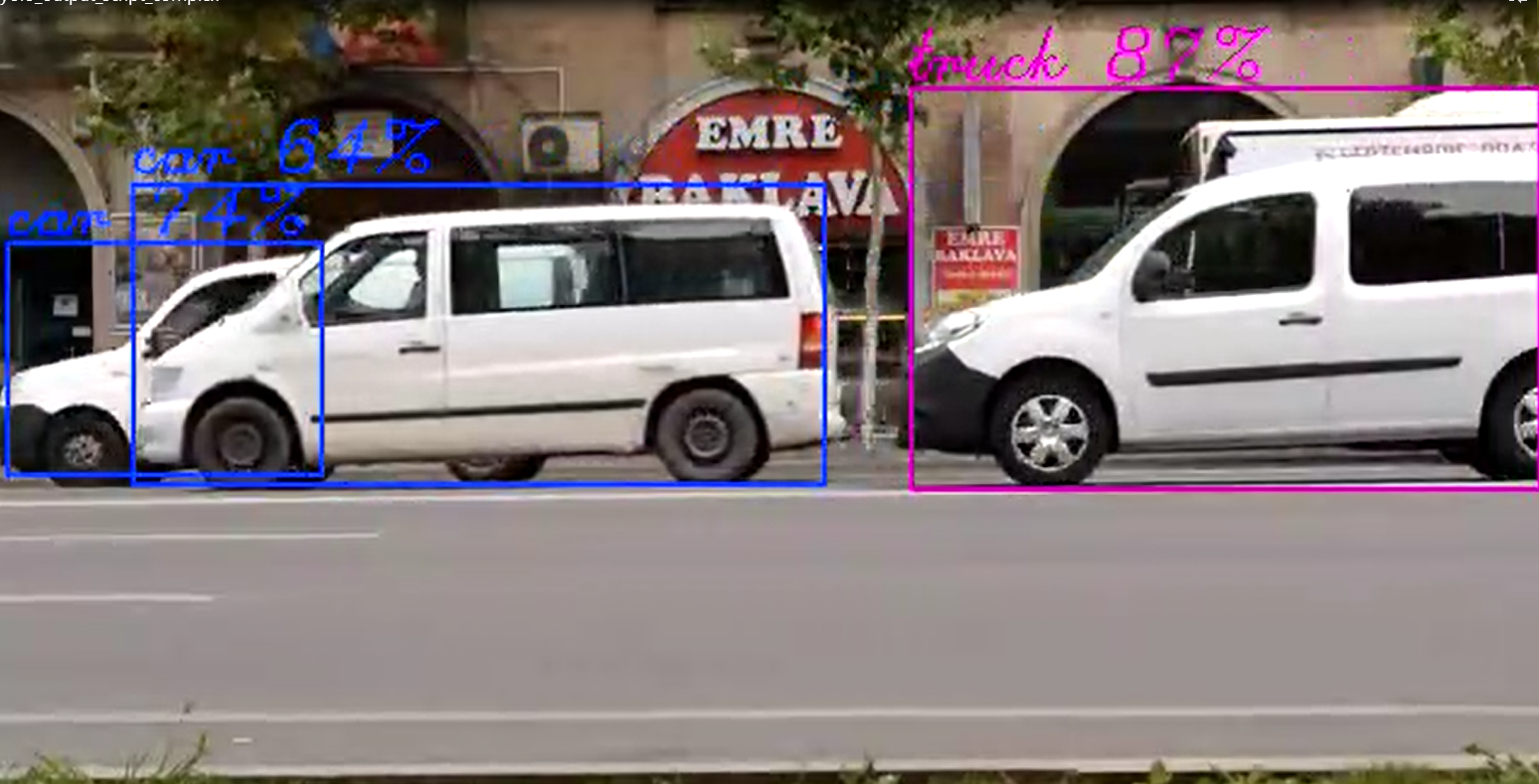
Comparison of different font types (simplex vs complex)
Default Triplex Font
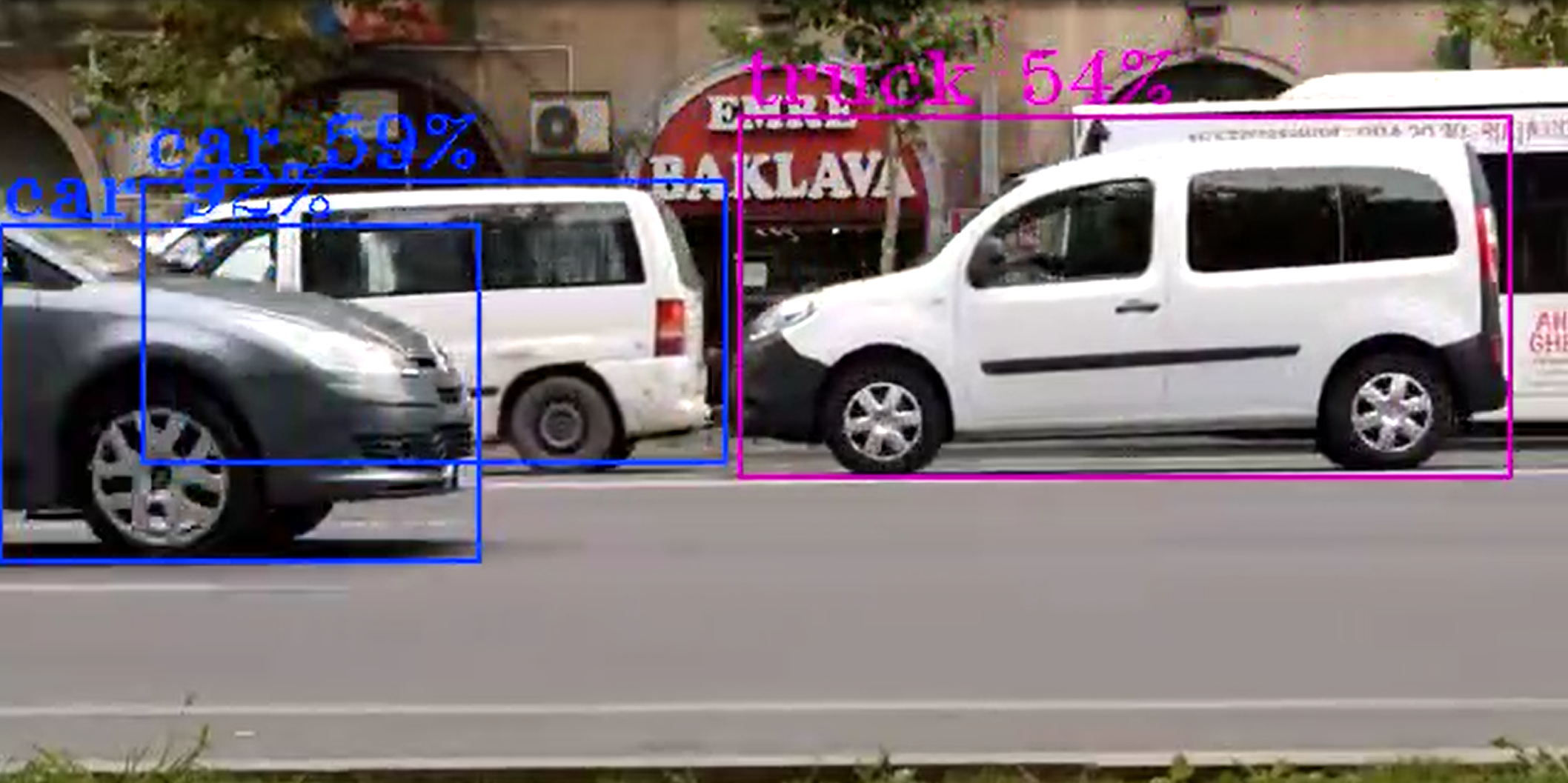
The default triplex font provides good readability
Label Filtering#
You can selectively show or hide detected objects based on their labels using filtering parameters:
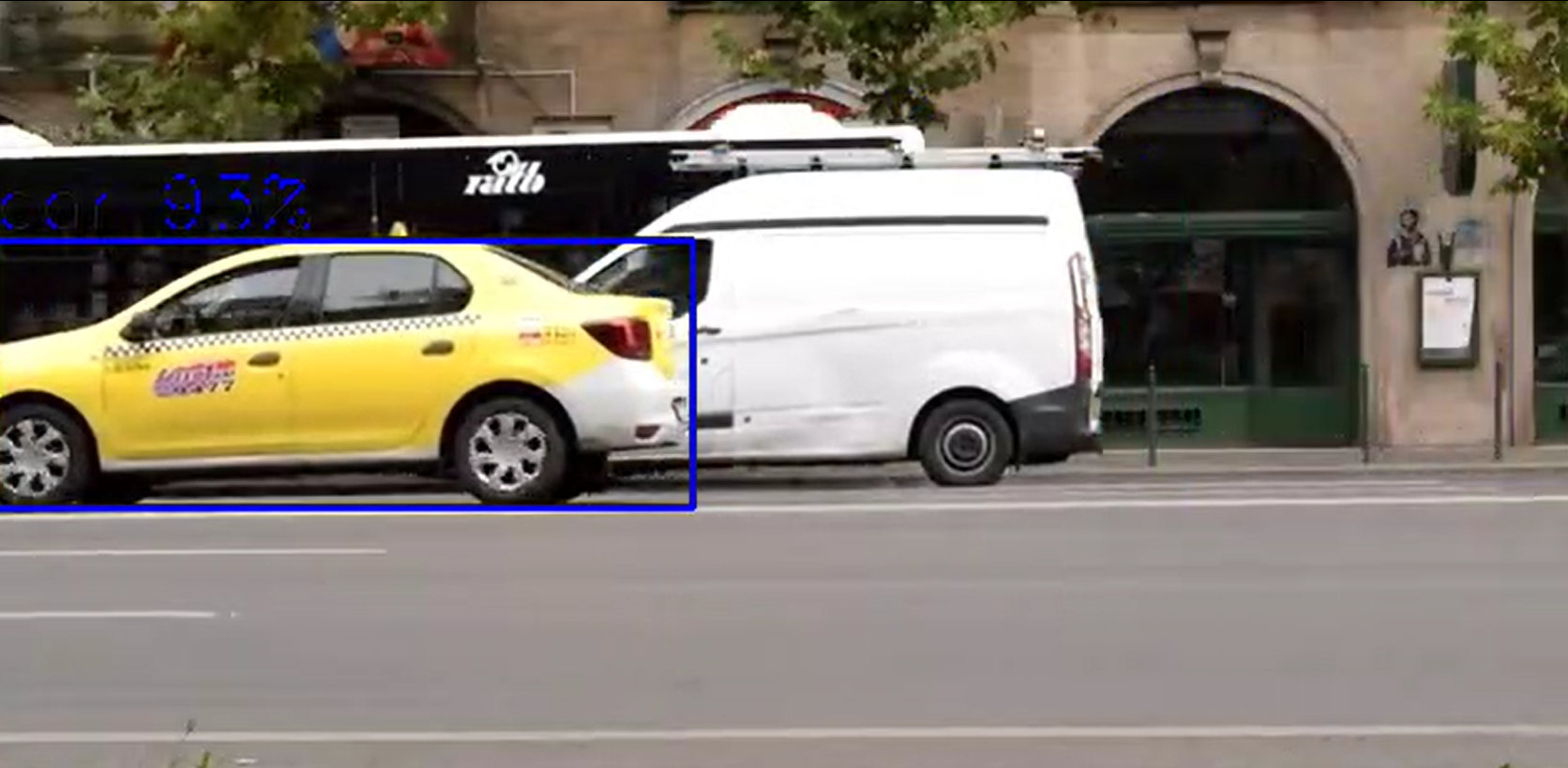
Include Labels (show-roi=person:car:truck)
Only objects with labels “person”, “car”, or “truck” will be displayed
All other detected objects will be hidden
Useful for focusing on specific object types
e.g displ-cfg=show-labels=true,show-roi=car
Exclude Labels (hide-roi=bottle:cup:laptop)
Objects with labels “bottle”, “cup”, or “laptop” will be hidden
All other detected objects will be displayed
Useful for removing distracting or irrelevant objects from the display
e.g displ-cfg=show-labels=true,hide-roi=car
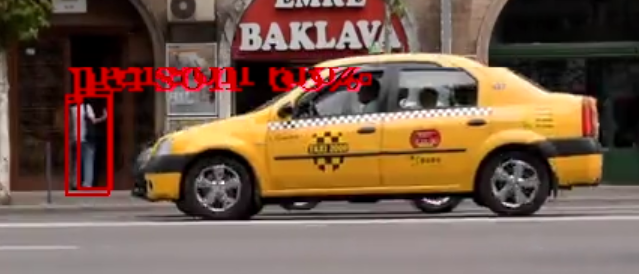
Filter Priority
If both
show-roiandhide-roiare specified,show-roitakes precedenceEmpty lists mean no filtering is applied
Blur Feature#
The gvawatermark element supports privacy protection through region of interest (ROI) blurring using a Gaussian blur with a dynamic kernel size as ~1/5 of each ROI dimension (minimum 7, always odd) so the blur strength scales with the region. This feature is useful for anonymizing faces, license plates, or other sensitive content in video streams.
Blur Configuration Parameters#
Blur functionality is controlled through the displ-cfg parameter with these options:
enable-blur=<bool> - Enable or disable blur feature (default: false) Blurring is applied only when “enable-blur=true”; if no “show-blur-roi” / “hide-blur-roi” filters are set, all ROIs are blurred.
show-blur-roi=<string> - Colon-separated list of object labels to blur (e.g., “person:face”)
hide-blur-roi=<string> - Colon-separated list of object labels to exclude from blurring
Blur Examples#
Basic Blur (All detected objects)
# Blur all detected ROIs
displ-cfg=enable-blur=true
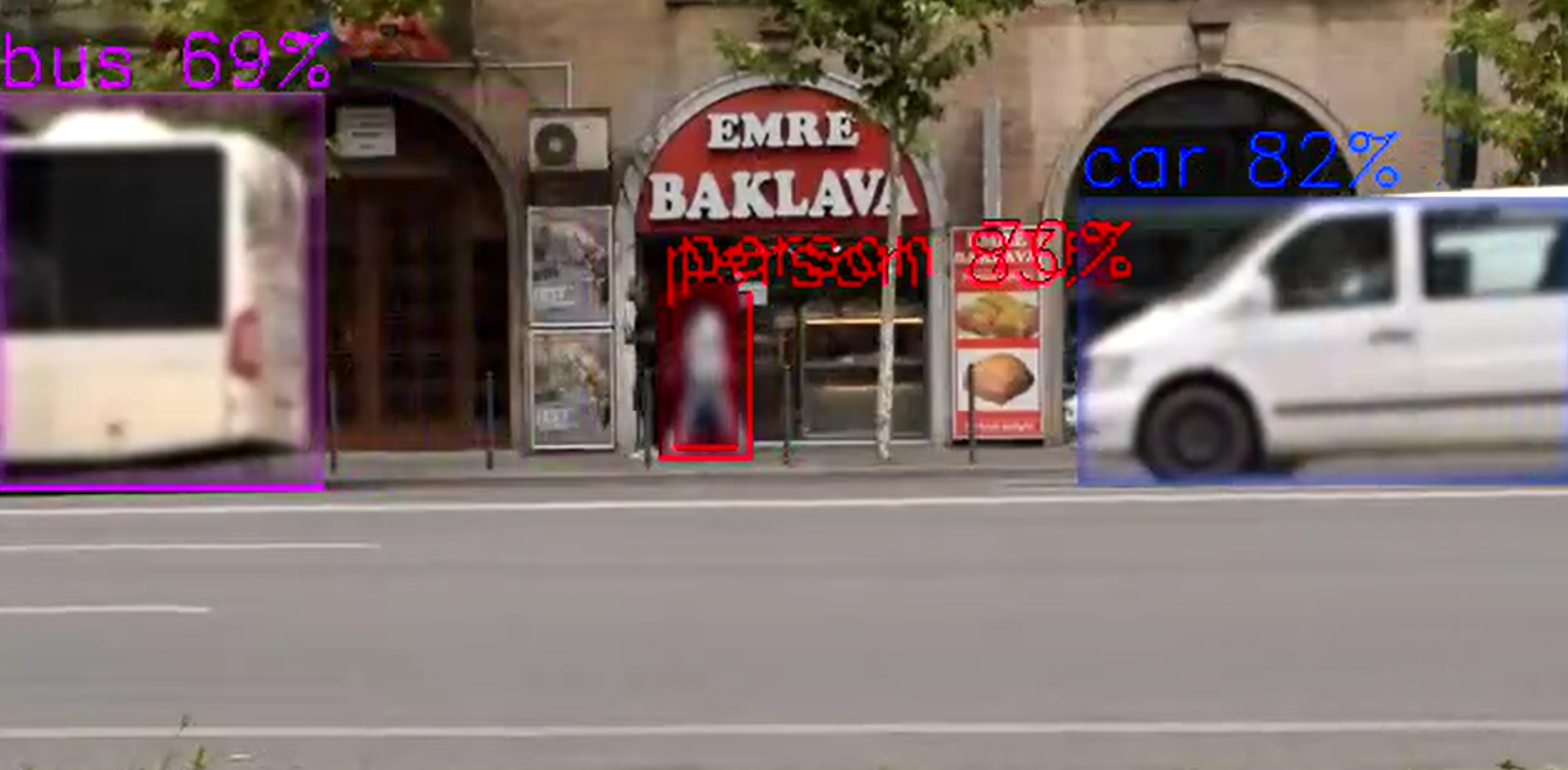
Selective Blur (Include specific labels)
# Blur only faces and persons
displ-cfg=enable-blur=true,show-blur-roi=face:person
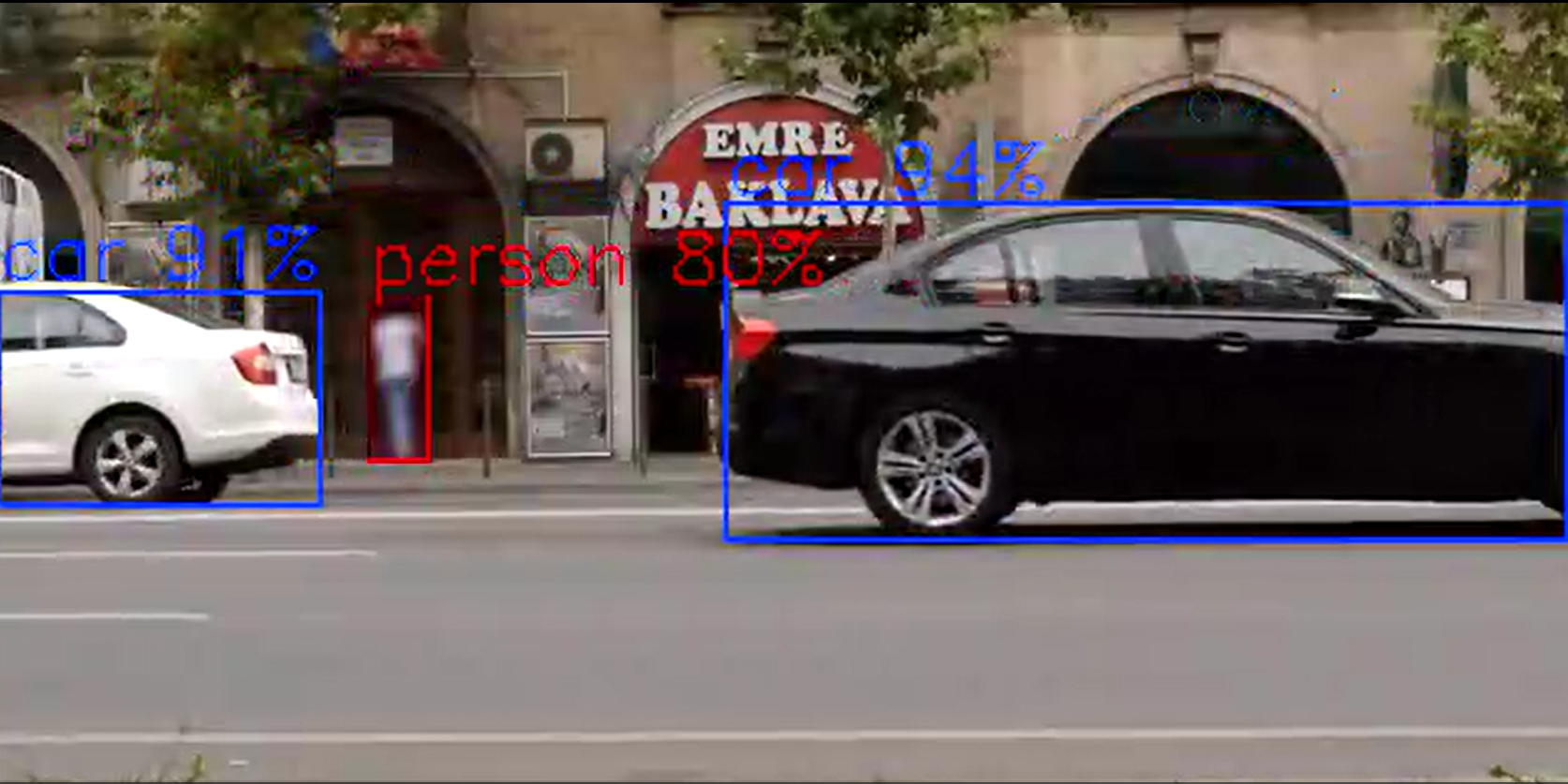
# Blur only cars
displ-cfg=enable-blur=true,show-blur-roi=car
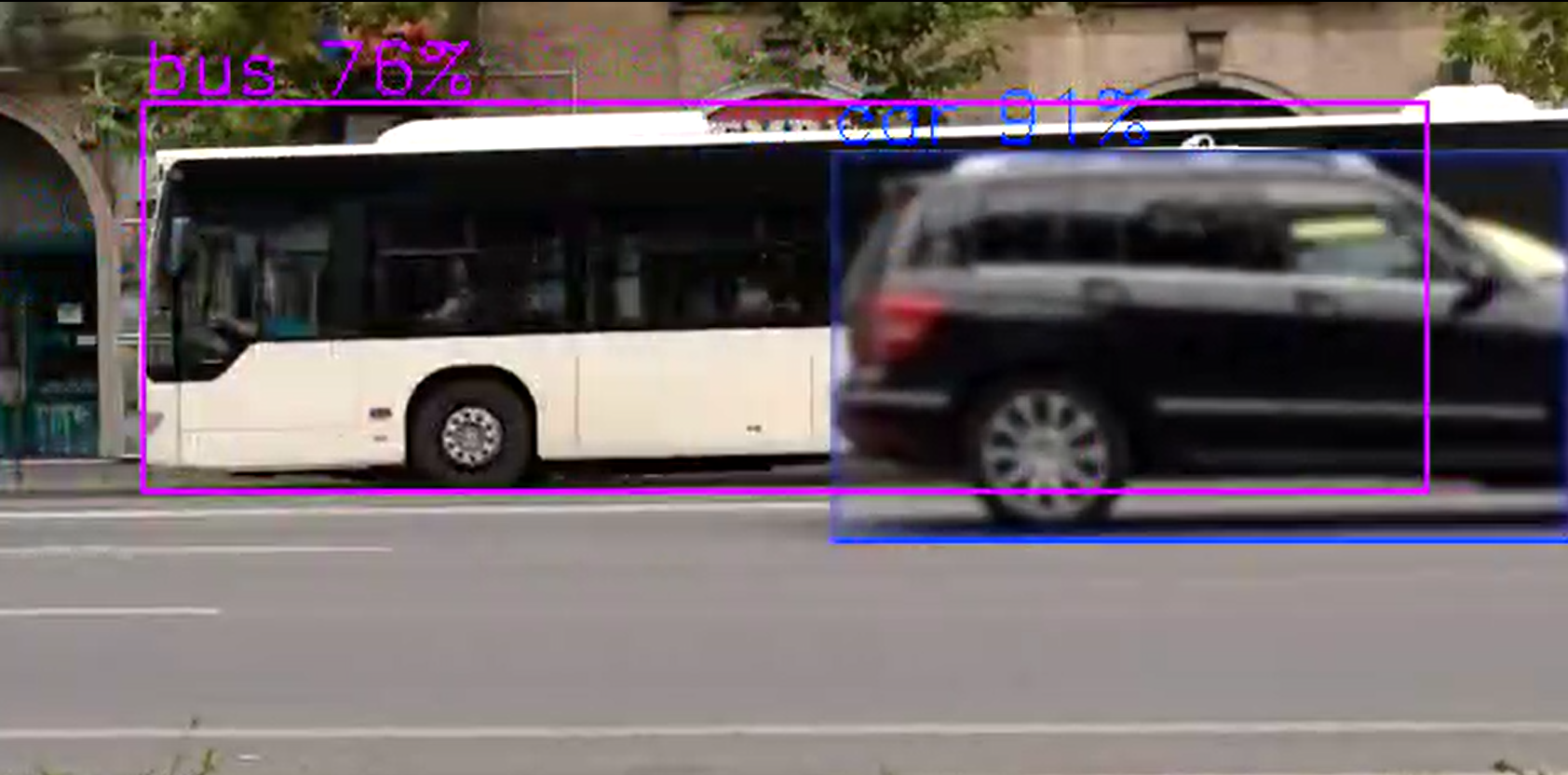
Exclude Blur (Blur all except specific labels)
# Blur all objects except cars and trucks
displ-cfg=enable-blur=true,hide-blur-roi=car:truck

# Blur all except persons
displ-cfg=enable-blur=true,hide-blur-roi=person
Combined with Display Options
# Blur faces with custom display settings
displ-cfg=enable-blur=true,show-blur-roi=face,show-labels=false,thickness=1

# Blur with labels and colored boxes
displ-cfg=enable-blur=true,show-blur-roi=person:face,color-idx=0,font-scale=0.8
Filter Precedence Rules#
show-blur-roi takes precedence over hide-blur-roi. When show-blur-roi is specified and not empty, only objects matching those labels will be blurred, and hide-blur-roi is ignored.
show-blur-roi specified and not empty: Only labels in show-blur-roi are blurred
show-blur-roi empty or unspecified: All labels are blurred except those in hide-blur-roi
Neither specified: All detected ROIs are blurred when enable-blur=true
Performance consideration#
Blurring runs on whichever device the element is set to, including device=GPU.
Unlike the rest of the watermark, the cost of a blur is proportional to the area of the regions being blurred, on either device. Blurring a large share of the frame is therefore expensive no matter the device, and gets more so with resolution.
Configuration Examples#
# Minimal labels with smaller font
displ-cfg=show-labels=true,show-roi=false

# Large text with background
displ-cfg=font-scale=2.0,draw-txt-bg=true

# Colored thin boxes with simple font
displ-cfg=color-idx=0,thickness=1,font-type=simplex

# Object colors from a custom color table
displ-cfg=color-table=/path/to/colors.txt

# Complete custom styling
displ-cfg=font-scale=1.5,thickness=3,color-idx=2,font-type=complex,draw-txt-bg=true

# Show only specific object types
displ-cfg=show-labels=true,show-roi=person:car:truck

# Hide specific object types
displ-cfg=show-labels=true,hide-roi=bottle:cup:laptop

# Combine filtering with styling
displ-cfg=show-labels=true,show-roi=person:car,font-scale=1.2,color-idx=1

# Move full-frame text (e.g. gvagenai result) to near the bottom of a 720p frame
displ-cfg=text-y=680

# Combine text position with other options
displ-cfg=font-scale=1.5,color-idx=1,thickness=5,text-y=680

# Privacy protection with blur
displ-cfg=enable-blur=true,show-blur-roi=face:person,show-labels=false

# Blur all except specific objects
displ-cfg=enable-blur=true,hide-blur-roi=car:truck,thickness=1
FPS Display#
Average FPS Display (displ-avgfps=true)
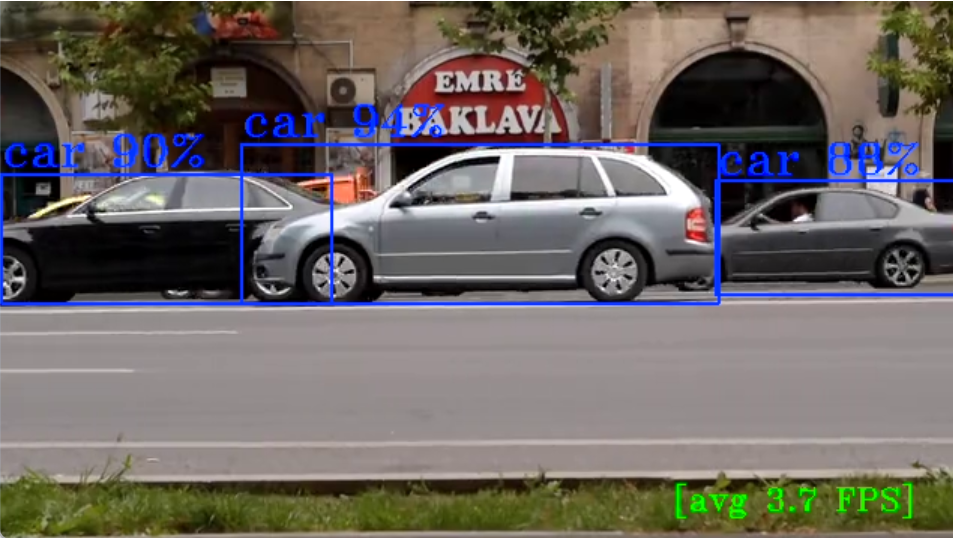
Displays average FPS counter when gvafpscounter element is present in pipeline
Watermark Metadata API#
See Watermark Metadata in the metadata developer guide for full API and Python usage examples.